
Part 1: What Is APA Format?
Week 4 — Lesson 2 | CI1000: Computer Basics for Healthcare Professionals
Learning Objectives
By the end of this lesson you will be able to:
- Explain what APA formatting is and why it is the standard citation style in healthcare and science.
- Identify the key components of an APA-formatted document: title page, running head, in-text citations, and references.
- Distinguish between plagiarism, paraphrasing, and direct quoting.
- Explain how plagiarism detection tools work and why academic integrity matters in healthcare education.
Part 1: What Is APA Format?
When you write a research paper, a report, or even a short essay in a college course, your instructor expects you to follow a specific formatting style. At UMA and across healthcare and science programs nationwide, that style is APA, which stands for the American Psychological Association.
APA format is a set of rules that govern how your paper looks (margins, fonts, spacing, headings) and how you give credit to the sources you use (in-text citations and a reference list). The current version is the APA 7th edition, published in 2020.
Why Does a Formatting Standard Exist?
Standardized formatting serves several purposes:
- Consistency -- Readers know exactly where to find the author's name, the date, the references, and the main argument, regardless of who wrote the paper.
- Credibility -- Proper citations show that your claims are supported by research, not just personal opinion.
- Fairness -- Giving credit to original authors is an ethical obligation. Using someone else's ideas without attribution is plagiarism.
- Professionalism -- In healthcare, research papers, grant proposals, and clinical guidelines all follow APA or similar standards. Learning APA now prepares you for professional writing throughout your career.
When Is APA Required at UMA?
Your instructors will specify when APA formatting is required, but as a general rule, any assignment that asks you to cite sources, write a research paper, or reference published information should follow APA guidelines. Discussion posts may require APA-style citations even when full formatting (title page, running head) is not expected.
Healthcare Connection: In healthcare professions, evidence-based practice means making clinical decisions supported by published research. When a nurse, medical assistant, or health administrator writes a report recommending a new protocol, they cite the studies that support their recommendation using APA format. This allows other professionals to verify the evidence and assess its quality. Writing in APA is not just an academic exercise; it is a professional communication skill.
Part 2: Key APA Components
An APA-formatted paper has several required elements. Understanding each one will help you set up your documents correctly from the start, rather than reformatting at the last minute before a deadline.
General Formatting Rules
- Font: Times New Roman 12-point, Calibri 11-point, or Arial 11-point
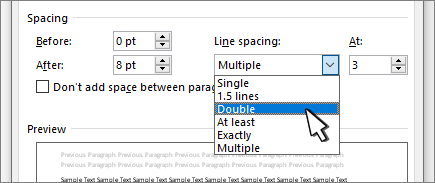
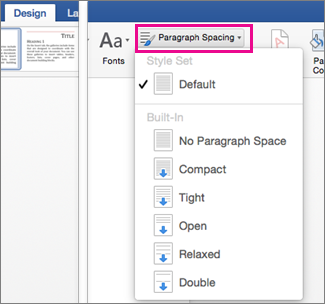
- Spacing: Double-spaced throughout, including the reference list
- Margins: One inch on all sides
- Page numbers: Top-right corner of every page
- Alignment: Left-aligned (not justified) with a half-inch first-line indent for body paragraphs
Key Components
Title Page
The title page is the first page of your paper. In APA 7th edition, the student version includes the following:
- Paper title -- Centered, bold, positioned in the upper half of the page
- Author name -- Centered below the title (your first and last name)
- Institutional affiliation -- Centered below your name (Ultimate Medical Academy)
- Course number and name -- Centered (for example, CI1000: Introduction to Computers)
- Instructor name -- Centered
- Due date -- Centered
In APA 7th edition, student papers do not require a running head unless your instructor specifically requests one.
Headings (Levels 1 through 3)
APA uses a heading system to organize content. Most student papers use Levels 1 through 3:
- Level 1: Centered, Bold, Title Case -- Used for major sections
- Level 2: Left-Aligned, Bold, Title Case -- Used for subsections
- Level 3: Left-Aligned, Bold Italic, Title Case -- Used for sub-subsections
Headings help readers navigate your paper quickly. In a five-page report on infection control procedures, for example, Level 1 headings might include "Introduction," "Methods," "Findings," and "Conclusion," while Level 2 headings break each section into specific topics.
In-Text Citations
APA uses an author-date citation system. Whenever you refer to information from a source, you include the author's last name and the publication year in parentheses. The following are examples:
- Paraphrase: Hand hygiene compliance rates improve when visual reminders are posted near sinks (Johnson, 2023).
- Direct quote: Johnson (2023) noted that "visual cues near handwashing stations increased compliance by 34%" (p. 112).
- Two authors: (Smith & Lee, 2022)
- Three or more authors: (Garcia et al., 2024)
Every in-text citation must have a corresponding entry in your reference list, and every reference list entry must be cited at least once in your paper.
Reference List
The reference list appears on its own page at the end of the paper. Key formatting rules include the following:
- Title "References" is centered and bold at the top of the page
- Entries are listed in alphabetical order by the first author's last name
- Each entry uses a hanging indent (the first line is flush left, and subsequent lines are indented one-half inch)
- Double-spaced with no extra space between entries
- Include up to 20 authors before using an ellipsis
Example: APA Reference Entry
Johnson, M. R. (2023). Visual cues and hand hygiene compliance in outpatient clinics. Journal of Healthcare Quality, 45(2), 108-119. https://doi.org/10.1097/jhq.example
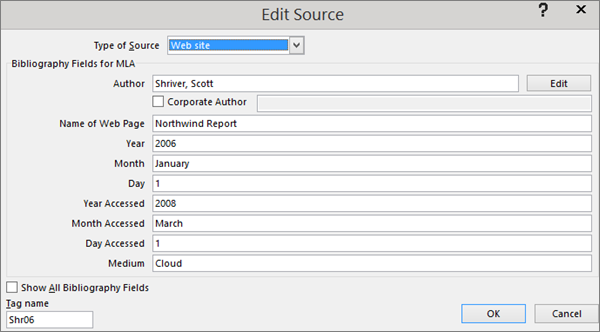
Pro Tip: Microsoft Word has a built-in citation manager under the References tab. Select APA as your style, then use Insert Citation to add sources as you write. When you finish, select Bibliography to generate a properly formatted reference list automatically. This saves time and reduces formatting errors.
Click the components below to build an APA journal article reference in the correct order. Click the × to remove a piece.
Part 3: Understanding Plagiarism
Plagiarism is presenting someone else's words, ideas, or work as your own without giving proper credit. It is one of the most serious academic integrity violations, and the consequences can range from a failing grade on an assignment to expulsion from a program. In healthcare professions, the stakes are even higher because dishonesty in academic work can undermine trust in a professional's competence and judgment.
Types of Plagiarism
Verbatim (word-for-word) plagiarism is copying text directly from a source and presenting it as your own writing without quotation marks or a citation. This is the most straightforward type and the easiest to detect.
Example: Copying two sentences from a Mayo Clinic article about diabetes management into your paper without quotation marks or a citation.
Mosaic (patchwork) plagiarism involves taking phrases or sentences from multiple sources and weaving them together with a few of your own words. Even though the final paragraph is not copied from a single source, the ideas and phrasing are not original.
Example: Combining a sentence from a CDC report with a sentence from a textbook, changing a few words in each, and presenting the combined paragraph without citations.
Self-plagiarism means submitting your own previous work (or portions of it) for a new assignment without your instructor's permission. Even though you wrote the original content, each assignment is expected to represent new effort and thinking.
Example: Submitting the same research paper you wrote for another course to fulfill a different course's assignment requirement.
Accidental plagiarism happens when a student intends to cite sources but makes errors, such as forgetting a citation, paraphrasing too closely to the original wording, or incorrectly formatting a reference. While the intent was not dishonest, the result is the same: someone else's work appears without proper credit.
Example: Paraphrasing a source by changing only two or three words in each sentence, without a citation, believing that minor word changes make it "your own."
Consequences of Plagiarism
| Setting | Potential Consequences |
|---|---|
| Academic (UMA) | Zero on the assignment, course failure, academic probation, or expulsion |
| Professional (Healthcare) | Loss of credibility, disciplinary action, termination, or license revocation |
| Research / Publishing | Retraction of published papers, funding loss, career damage |
Healthcare Connection: In 2012, a prominent anesthesiologist had more than 180 published research papers retracted due to fabricated data and plagiarized content. The retractions affected clinical guidelines that hospitals had used to make patient care decisions. This case demonstrates that academic dishonesty in healthcare does not just affect the individual; it can directly impact patient safety and institutional trust.
Plagiarism Decision Points
You are writing a research paper on infection control protocols. You find a paragraph in a published nursing journal that perfectly explains a concept you need.
What is the best approach?
You decided to paraphrase. You changed 3 words in the original 40-word sentence and added a citation.
Is this sufficient paraphrasing?
Your classmate offers to share their completed assignment so you can "get ideas" for your own paper on the same topic.
What should you do?
Scenario Complete
Understanding plagiarism is about more than avoiding punishment — it is about developing honest research habits that will serve you throughout your healthcare career.
Part 4: Paraphrasing and Quoting
Understanding the difference between paraphrasing and quoting is essential for avoiding plagiarism. Both techniques allow you to incorporate source material into your writing, but they serve different purposes and have different formatting rules.
Paraphrasing
Paraphrasing means restating an author's idea in your own words and sentence structure. A good paraphrase captures the meaning of the original without copying its language. You must still include an in-text citation because the idea belongs to the original author, even though the words are yours.
How to Paraphrase Properly
- Read the original passage carefully until you understand it fully.
- Set the source aside and write the idea from memory in your own words.
- Compare your version to the original to make sure you have not accidentally used the same phrasing.
- Add an in-text citation with the author's last name and year.
Example Comparison: Original source (Johnson, 2023): "Visual cues near handwashing stations increased compliance by 34% among clinical staff in outpatient settings."
Acceptable paraphrase: Research found that posting reminders at sinks led to a significant improvement in how often outpatient clinic workers washed their hands (Johnson, 2023).
Unacceptable paraphrase (too close): Visual reminders near handwashing areas boosted compliance by 34% among clinical workers in outpatient environments (Johnson, 2023).
Direct Quoting
A direct quote reproduces the exact words from a source, enclosed in quotation marks. Direct quotes are appropriate when the original wording is particularly important, memorable, or technical. In APA, direct quotes of fewer than 40 words are placed within the text in quotation marks. Quotes of 40 or more words are formatted as a block quote (indented one-half inch from the left margin, without quotation marks).
A direct quote requires three elements: the author's name, the publication year, and the page number (or paragraph number for online sources without page numbers).
According to Johnson (2023), "visual cues near handwashing stations increased compliance by 34%" (p. 112).
Signal Phrases
A signal phrase introduces a source by naming the author before the cited material. Signal phrases help your writing flow naturally and make it clear where the source material begins. Common signal phrases include the following:
- According to Smith (2024), ...
- Garcia et al. (2023) argued that ...
- As Johnson (2023) noted, ...
- Research by Lee and Park (2022) demonstrated that ...
Knowledge Check
Part 5: Plagiarism Prevention Tools
Colleges and universities, including UMA, use plagiarism detection software to verify the originality of student submissions. Understanding how these tools work can help you use them as a resource rather than seeing them as a threat.
How Turnitin Works
Turnitin is the most widely used plagiarism detection tool in higher education. When you submit a paper through Turnitin, the software compares your text against the following:
- A database of billions of web pages
- A database of published academic journals and books
- A database of previously submitted student papers from institutions worldwide
After the comparison, Turnitin generates a Similarity Report with a percentage score that indicates how much of your paper matches existing sources. A match does not automatically mean plagiarism. Properly quoted and cited material will show as a match but is not dishonest. The instructor reviews the report to determine whether matches represent legitimate citations or problematic similarities.
Understanding Similarity Scores
| Score Range | Interpretation | Action |
|---|---|---|
| 0% to 15% | Low similarity; typically acceptable | Review matches to confirm proper citations |
| 16% to 30% | Moderate similarity; review needed | Check that all matched text is properly quoted or cited |
| 31% to 50% | High similarity; potential concern | Rewrite paraphrased sections in your own words; verify citations |
| Above 50% | Very high; likely insufficient original writing | Substantially revise the paper before submission |
Strategies for Preventing Plagiarism
The best way to avoid plagiarism is to develop strong habits from the beginning of your academic career. Consider the following strategies:
- Start early. Rushed writing leads to careless citation mistakes. Give yourself time to research, write, and revise.
- Take careful notes. When researching, always record the author, title, date, and page number alongside any notes you take. This makes creating citations much easier later.
- Cite as you write. Do not wait until the end to add citations. Insert them each time you use a source, so nothing gets overlooked.
- Use Word's citation manager. The References tab in Microsoft Word lets you store source information and insert formatted citations with a few clicks.
- Run a self-check. If your instructor allows it, submit a draft to Turnitin before the deadline to review your Similarity Report. This gives you a chance to correct any issues before the final submission.
Key Takeaway: Plagiarism prevention is not about outsmarting detection software. It is about building honest writing habits that serve you throughout your academic and healthcare career. When you cite your sources correctly, you demonstrate integrity, support your arguments with evidence, and respect the work of other researchers and professionals.
Knowledge Check
Lesson 4.2 Summary
- APA (American Psychological Association) format is the standard citation style in healthcare, science, and social science programs, including all courses at UMA that require source-based writing.
- Key APA components include a title page, double-spacing, one-inch margins, APA heading levels, in-text citations using the author-date system, and a hanging-indent reference list.
- Plagiarism includes verbatim copying, mosaic patchwork, self-plagiarism, and accidental plagiarism. All carry serious academic and professional consequences.
- Proper paraphrasing restates ideas in your own words with a citation. Direct quoting reproduces exact wording in quotation marks with author, year, and page number.
- Turnitin compares your submission against billions of sources and produces a Similarity Report. Use it as a self-check tool, not just an enforcement mechanism.
- Building strong citation habits now, including using Word's built-in citation manager, prepares you for professional evidence-based writing in your healthcare career.